
AI indexing in 2026 works by fundamentally different rules than anything SEO professionals have dealt with before. Three years ago the logic was simple: rank in Google's top results, get traffic. Today users ask questions directly in ChatGPT, Perplexity, or Google AI Overview — and get a ready-made answer without clicking a single link. This isn't a future trend. It's already happening, and it's reshaping how every website on the internet gets discovered.
In this guide we break down exactly how neural networks are changing search and indexing, what GEO and AEO mean for your site, and the concrete technical steps that determine whether AI systems cite you — or your competitor.
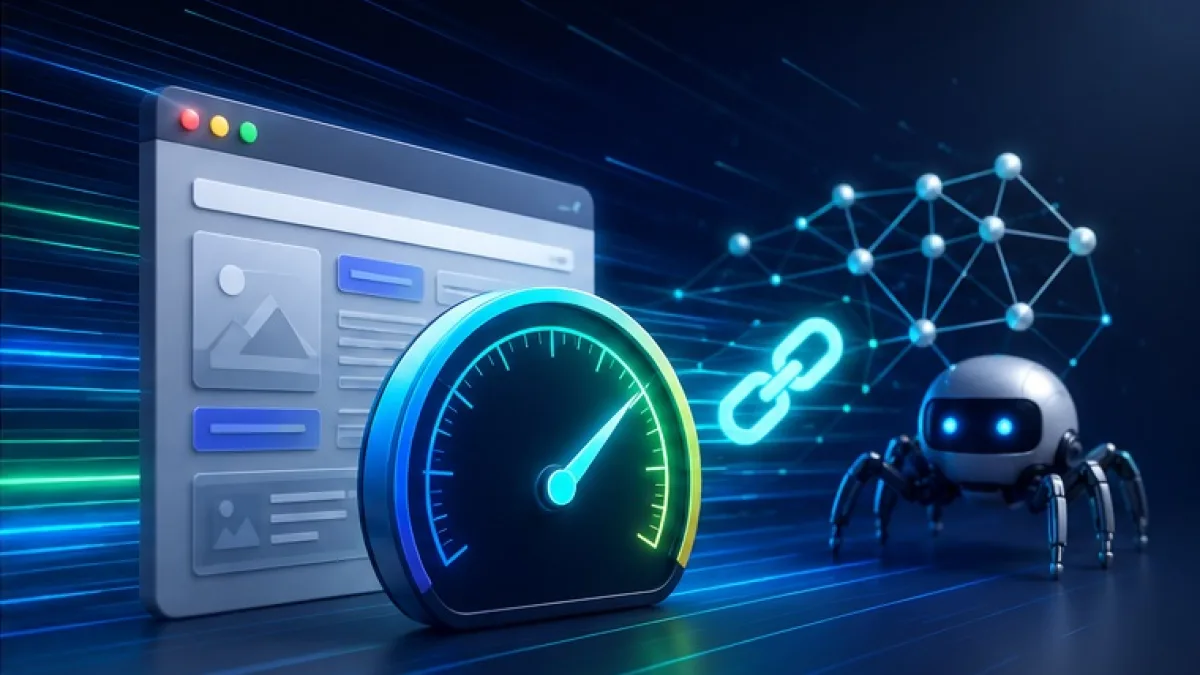
How Neural Networks Are Changing Search in 2026: The Data
AI platforms now generate 45 billion sessions per month worldwide. In the United States, AI accounts for roughly 34% of all search-equivalent traffic — and that share keeps rising. A user who previously ran 5 Google searches to research a purchasing decision now runs 1–2: the rest get resolved in a direct conversation with an AI model. (DOJO AI, 2026)
The market leader is ChatGPT with 55–60% of AI referral traffic. Second is Perplexity (18–22%), third is Google Gemini (~8.6%). The most striking growth story belongs to Grok from xAI: from 1.2 million sessions in January 2025 to 1.4 billion in December — a 116,000% increase in twelve months. If your 2026 strategy doesn't account for Grok, you're already behind. (Stackmatix, March 2026)
Google isn't disappearing — it's transforming. AI Overviews and "AI Mode" convert the familiar SERP into a generative response. The user reads synthesized text and only clicks through if they want more detail. This fundamentally changes the economics of organic traffic for every publisher and business online.
GEO and AEO: The New Disciplines That Sit Alongside SEO
Classic SEO optimizes pages for ranking algorithms: headings, keywords, backlinks. But when ChatGPT generates an answer, it doesn't rank pages — it synthesizes new text from dozens of sources. Getting into that synthesis requires two disciplines that didn't exist three years ago.
AEO — Answer Engine Optimization
AEO (Answer Engine Optimization) targets voice assistants and zero-click answer blocks. The goal: short, precise answers AI systems can quote directly. Core principles:
GEO — Generative Engine Optimization
GEO (Generative Engine Optimization) is the optimization of content for large language models. The goal is for your site to become a source that AI cites in its answers. In 2026, up to 40% of search sessions end without a site visit — the user gets their answer inside the AI interface. If you're not in the source pool, your competitor is. (Habr: GEO/AEO optimization guide)
GEO operates on three levels: technical access for AI crawlers, content structure that's easy for LLMs to parse, and brand authority built through external citations and mentions.
AI Crawlers in 2026: Who They Are and What They Do
Every major AI platform runs its own crawler that visits websites and collects data. These are not the same bots as Googlebot — they have different user-agents, different crawl patterns, and different purposes. Understanding which bot does what is the starting point for any AI indexing strategy.
The most common problem: websites accidentally block these bots. Hosting providers add blanket restrictions by default, and robots.txt templates from 2022 predate GPTBot entirely — leaving sites invisible to AI search even when the content is excellent.
Audits consistently find that a large share of websites block ClaudeBot and GPTBot without their owners knowing. (Habr, April 2026)
robots.txt in 2026: Stop Accidentally Blocking AI Crawlers
Correct robots.txt configuration is the mandatory first step for any AI indexing strategy. If an AI crawler cannot access your site, no amount of content quality, Schema markup, or GEO optimization will matter.
Minimum correct configuration for AI search visibility in 2026:
User-agent: GPTBot
Allow: /
User-agent: OAI-SearchBot
Allow: /
User-agent: ClaudeBot
Allow: /
User-agent: Claude-SearchBot
Allow: /
User-agent: PerplexityBot
Allow: /
User-agent: Google-Extended
Allow: /
User-agent: Applebot-Extended
Allow: /
User-agent: meta-externalagent
Allow: /
One important distinction: GPTBot is used for training the model, not for ChatGPT's live search. Blocking GPTBot does not affect whether ChatGPT cites your pages in answers — it only prevents your content from being used to train future GPT versions. Whether to block it is a strategic call based on your content licensing priorities. (Anthropic: crawling policy)
A new 2025–2026 standard worth implementing: the llms.txt file in your site root. Think of it as robots.txt for language models — a concise, structured description of your site and its key content in a format LLMs parse far more efficiently than standard HTML. (llmstxt.org)
AI Indexing Speed: Why Fast Crawling Matters More Than Ever
In classic SEO, a new page could sit unindexed for weeks without serious consequences. In the AI search era, that delay is far more costly: neural networks build their understanding of your site from whatever data has already been indexed. If a page enters Google's index a month late, competitors may already be cited in ChatGPT responses for that topic.
This is why the Google Indexing API + IndexNow combination is now an AI visibility tool, not just an SEO one:
The mechanism that connects indexing to AI visibility: after a Google Indexing API submission, Googlebot visits the page and creates its index record. That record is exactly what AI systems reference when generating answers. Independent research shows 43.2% of pages ranking #1 in Google are cited by ChatGPT — 3.5× more often than pages outside the top 20. No Google index entry means no AI citation. (AI Search Statistics 2026)
IndexerPro.net handles both simultaneously: it submits URLs through Google Indexing API and IndexNow in a single operation, logs the actual Googlebot visit to confirm it happened, and refunds credits if the bot never arrives. Pages get indexed in hours rather than weeks.
Content Structure That Neural Networks Can Actually Use
Once your AI crawlers have access and your pages are indexed, the second question is: how easily can a language model extract meaning from your content? This is where GEO principles diverge most sharply from classic SEO.
Schema.org — Structured Signals LLMs Prioritize
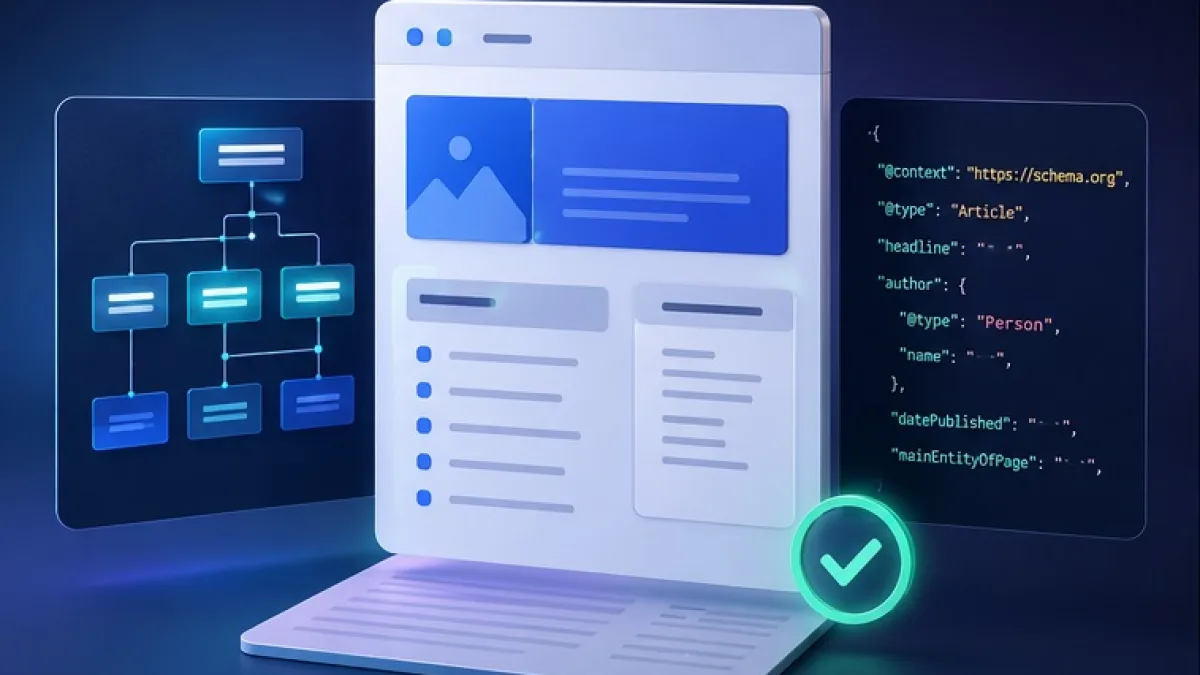
JSON-LD structured data gives neural networks an unambiguous signal about what a page is, who wrote it, and what topic it covers. Minimum Schema.org implementation for GEO (schema.org):
Headers, Lists, and Direct Answers
Perplexity in particular rewards content built around clear H2/H3 headings, bulleted lists, and direct answers at the top of each section. Data confirms it: users arriving from Perplexity view an average of 13 pages per session versus 11.8 from Google. Structured content doesn't just rank better — it converts better from AI referral traffic. (AI Search Statistics 2026)
JavaScript Rendering and Page Speed
Many AI crawlers do not execute JavaScript. If your site relies on client-side rendering for its main content, those pages may be partially or entirely invisible to neural networks. Verify that all key text appears in the raw HTML response. Page speed matters too: if a page doesn't load within 3 seconds, a crawler may abandon it before reading the content.

Monitoring AI Crawler Activity: The Missing Data Layer
One of the most overlooked gaps in AI visibility work is measurement. Google Search Console tells you when Googlebot visited. But which AI bots came to your site, when, and which pages they crawled — almost no standard tool surfaces this data.
That data is critical. You enable GPTBot and ClaudeBot in robots.txt, publish new content — but did the bots actually show up? Without user-agent logging you're optimizing blind.
The right approach logs every AI crawler visit with timestamp, IP, user-agent string, and specific URL. This lets you:
IndexerPro.net includes this analytics layer natively: the AI crawler dashboard shows exactly which bots visited each URL batch, with full time-series breakdown by agent type. It's a monitoring capability that standalone SEO tools don't offer.
AI Feed and AI Sitemap: The New Technical Standard
Beyond the standard sitemap.xml for search engines, 2025–2026 has seen the emergence of a dedicated format for language models: AI Sitemap and AI Feed. These files are structured specifically for LLM consumption — organized content, clean metadata, and clear separation by topic batch.
How the batch approach works:
This creates crawl prioritization: AI bots encounter your highest-value pages first, rather than landing randomly across a site's long tail.
Frequently Asked Questions (FAQ)
Will neural networks replace Google search entirely?
Not in the near term. Google is adapting by integrating AI Overviews and AI Mode directly into search. Total information-discovery sessions (traditional + AI) continue to grow. But AI's share of how users find and evaluate information is expanding rapidly — ignoring it means ceding ground to competitors who don't.
Does AI indexing require separate optimization for each platform?
Core principles are universal: technical crawler access, structured content, brand authority. Platforms differ at the edges — Perplexity rewards explicit source citations, ChatGPT weights brand authority built through third-party mentions, Google AI Overview uses traditional E-E-A-T signals. A strong technical and content foundation covers all of them.
How directly does Google indexing speed affect ChatGPT visibility?
Very directly. Research shows 43.2% of #1-ranked Google pages are cited by ChatGPT — 3.5× more than pages outside the top 20. Accelerating Google indexing through the official API is simultaneously an SEO move and an AI visibility move. (Google Indexing API)
What is llms.txt and do I need it in 2026?
The llms.txt file is an emerging standard — a structured, plain-text description of your site designed for language models to read more efficiently than crawling full HTML pages. It's not yet mandatory, but early adopters consistently report better AI citation rates. (llmstxt.org)
How do I confirm AI crawlers can actually reach my site?
Start with robots.txt: check for any Disallow rules targeting GPTBot, ClaudeBot, PerplexityBot, or Google-Extended. Then test your pages without JavaScript to see what crawlers actually receive. Finally, use server-log or dedicated monitoring tools that track AI crawler visits by user-agent — this is the only reliable way to confirm bots are arriving rather than being silently blocked.
What's the difference between Google Indexing API and IndexNow?
Google Indexing API sends a crawl request specifically to Googlebot, queuing the URL for immediate indexing in Google's index. IndexNow is a separate open protocol that notifies Bing and other participating engines of page updates. They serve different search engines and both should be used — they're complementary, not interchangeable. (IndexNow FAQ)
Conclusion
AI indexing in 2026 is not a future problem — it's a present one. Neural networks have grown from niche tools to 45 billion sessions per month, and users are already making decisions based on ChatGPT and Perplexity answers before they ever reach a traditional search result.
For webmasters and SEO professionals, the implication is clear: AI visibility is not an add-on to SEO — it's the next layer of it. That layer starts with technical accessibility for AI crawlers, fast indexing through official APIs, and content structure that language models can reliably cite.
The window of competitive advantage is open right now — most sites haven't made these changes yet. Start with the fundamentals: audit your robots.txt, submit your URLs through IndexerPro.net, and verify that AI bots are actually reaching your content.